To convert kilograms (kg) to grams (g), you multiply the mass in kilograms by 1,000g/kg. This is because 1 kilogram is equivalent to 1,000 grams. The formula is:
Base ten numeration or decimal system of numeration is a number system that uses ten different digits to write numbers. These digits are 0, 1, 2, 3, 4, 5,6,7,8 and 9.
Example the number 36 356 907 has digits 0, 3, 5, 6, 7, 9.
Base 10 number system is widely used on most parts of Math. It is often the first way kids learn how to count.
a) The place value of each digit in base ten numeration.
The place value of digits in a number starts with a small value in position from the right of a number to a large value in position to the left of a number.
The values in position start with ones, tens, hundreds, thousands, ten thousands and so on.
Example the number 234 371 990. We can write this number as:
Teaching is a very complex activity because students have different characteristics hence teachers must master a variety of knowledge and skills and be flexible in their application of these skills and knowledge in the classroom. There are several important skills that every teacher should possess to effectively educate and inspire their students.
These skills include:
1)Classroom management skills.
The teacher should have classroom management skills in order to keep the class as a whole working together and oriented towards classroom tasks.
Teacher’s with classroom management skills can use different strategies for establishing rules and procedures, organizing students in groups in the classroom, monitoring and pacing classroom activities and handling misbehavior in the classroom. These strategies will help to establish and maintain an orderly and productive learning environment in which learning can effectively occur. Also, these strategies help students to maintain good behaviors and eliminate bad behavior of students such as making unnecessary noise in the classroom and thus promoting discipline to students and hence creating a positive atmosphere where students feel safe and respected.
2)Communication skills.
Communication skills are important to a teacher not only in teaching but also in interacting with parents and students inside and outside the classroom.
Teachers need to be able to clearly convey information, listen actively to students, and provide constructive feedback. Effective communication between teachers and students helps to build trust, and understanding in the classroom.
Teachers should keep criticism at a minimum and have assertive rather than aggressive, manipulative or passive communication style.
Teachers should have good communication skills in speaking, listening and constructively resolving conflicts.
Teachers should work to improve student’s communication skills by teaching students on importance of positive relationship and cooperation and respect between themselves and other people in the society.
3)Assessment skills.
Teachers need skills on how to use assessment effectively before and during instructions. These skills help teachers to decide what types of assessments they want to use to document their students’ performance after instructions. Examples of assessments includes asking questions, quizzes, assignments, home works and project works.
For example, before teaching about Accounts, the teacher can assess whether his/her students are familiar with terms like Balance sheet, Trial balance and ledger books by asking questions to students about such terminologies related to accounts.
During instructions a teacher can use ongoing observation and monitoring to determine whether his/her instructions are at a level that challenges students and detect which students need teacher’s attention and which areas where difficult to students so that he or she can give more explanation and emphasis in those areas. The teacher will also need to grade students to provide feedback about their achievements.
4)Technological skills.
Technology supports learning of students for effective use of technology in education teachers must be skilled in using technology for learning. Students learn effectively using technology from teachers who increase their technological knowledge and skills and integrate computers appropriately into classroom learning. Examples of technologies which can be used to facilitate learning includes computers and projectors which can display clearly images and videos of different concepts and information taught in the classroom. This makes learning interesting, fun and alive to students. It also helps teachers to explain complex topics easily to students.
However, this integration should match up with students learning needs such as the need to prepare for employment jobs which most require technological expertise and computer-based skills. Also, effective teachers have skills and knowledge about various assistive devices to support the learning of students with disabilities.
5)Motivational skills.
Effective teachers possess and use motivation skills to help students become self-motivated and take responsibility for their learning.
Effective teachers give students the opportunity to think creatively and deeply about projects, this motivates students because they can make choices in line with their personal interests.
Also, teachers can motivate students by rewarding the students with the best performance. This motivates the students to work hard because of feeling appreciated and their efforts being noticed by their teachers.
6)Creativity skills
Teachers should possess creativity skills to develop innovative lesson plans, projects, and activities that promote critical thinking of students such as asking questions,inspire creativity,encouraging decision making,connecting different ideas,group discussions and incorporating different points of view. Creative approaches to teaching can make learning more enjoyable,interactive and effective and captivate students’ interest in learning.
7)Organization skills
Effective organization skills help teachers manage their time, resources, and classroom materials efficiently. They should be able to plan lessons, set goals, and keep track of students’ progress and assessments.Teachers should also encourage students to clean up, sort, and organize various supplies and tools, in order to establish a culture of organization within the class.
Classroom organization skills helps teachers focus on activities, schedules, and lessons better.Students can also access supplies, technologies, and tools quicker, which improves their productivity.
8)Collaboration skills
Collaboration skills are important for teachers to work effectively with colleagues, parents, and other stakeholders involved in a student’s education. Collaborating with others can lead to new ideas, resources, and strategies to enhance teaching and learning.
Teachers can use different collaborative strategies in the classroom such as building trust,establishing group interactions,promoting open communication,using real world problems and applying collaborative learning technological devices in teaching.
It is important to note that different teaching contexts may require additional skills. However, possessing these essential and important skills can significantly contribute to a teacher’s effectiveness in the classroom.
To SIGN UP and get started in crypto on BINANCE CLICK HERE
Teachers must master a variety of knowledge and skills and be flexible in the application of these skills and knowledge in the classroom because students have different characteristics also learning situations and approaches change from time to time.
Important knowledge teachers must possess includes:
1)Subject matter competence
Effective and competent teachers should have knowledge and a deep understanding of the subjects they teach. They should be knowledgeable about the content, concepts, theories, facts,terms and methodologies relevant to their subject area. Also,the teacher should be knowledgeable about organizing ideas, ways of thinking and arguing, patterns of change within a discipline, beliefs about a discipline and the ability to carry ideas from one discipline to another.
Also, teachers should know how to connect the subject matter they are teaching to students’ environment so as to make the subject matter more relevant to students.
2)Appropriate instructional strategies and methods
Effective and competent teachers should have the knowledge of effective teaching strategies and instructional methods to use and how to use them, in what situations to use them and to which learners to use such instructional methods in teaching. Also, they should understand how to plan lessons, create learning objectives, design assessments, and differentiate instructions to meet the diverse needs of their students.
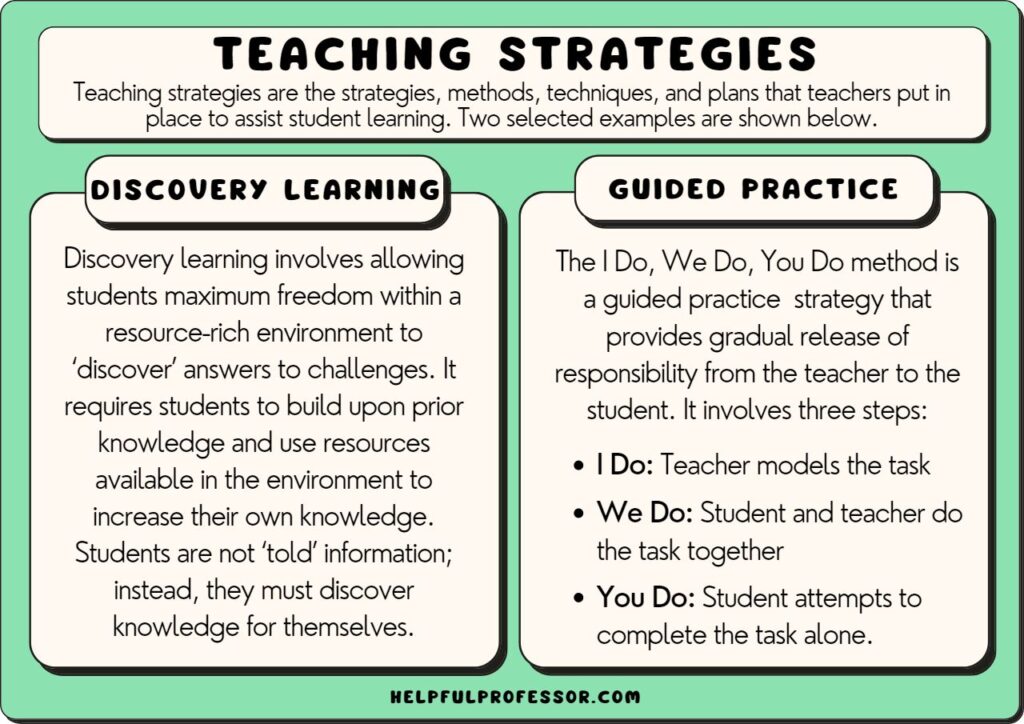
Examples of instructional strategies includes:
The constructivist strategy this is a learner centred approach which will make students actively participate in constructing their knowledge and understanding with guidance from the teacher. It includes activities such as asking questions to students, group discussions and project work. Such activities make the student actively engaged in the construction and creation of knowledge in learning.
The direct instruction strategy this is a teacher centred approach which will make the teacher direct and control and set learning expectations for students. It includes activities such as lecturing. Such activities help students to get the relevant information directly from the teacher because the teacher will focus more on the important issues which are significant to students and thus not overwhelming students with insignificant information in learning.
Effective and competent teachers should have the knowledge and understanding of how to create inclusive education practices,strategies and instruction materials appropriate for their students learning process according to the levels of education of the learners Effective teachers understand and have the knowledge on how to use appropriate teaching practice by considering the age, skills and abilities of the learners because they understand developmental progressions of children and hence, they are able to use teaching practices that are optimal for each child. Example a kindergarten school teacher can use songs to teach his or her students to count numbers.Hence a competent teacher has the knowledge on which instructional strategy to use based on the situation in the class, learning needs,interests of the students,nature of the content or topic taught and nature of the learners.
3)Goal setting and instructional planning.
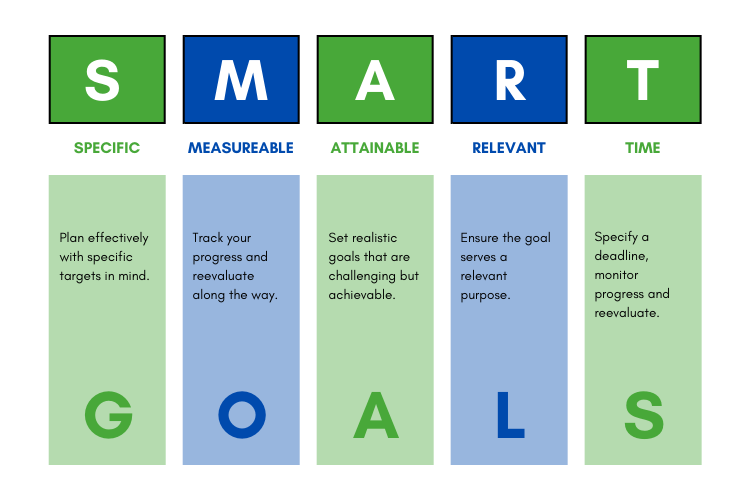
Effective teachers should have the knowledge on how to set SMART goals for their teaching and organize plans and learning activities for reaching those SMART goals.
Among important goals of learning set by teachers is developing necessary and important skills and competence to students. This can be easily achieved by teachers by planning learning activities which will make students easily develop such skills and competences.
Effective teachers should have the knowledge on how to create and set instructional plans by considering the kinds of information, models and inquiry opportunities.
4)Working effectively with students from diverse backgrounds.
Effective teachers must be knowledgeable about cultural diversity and possess the skills to create inclusive classrooms where students from diverse backgrounds feel valued and respected. They should work to ensure equitable opportunities for all students and be sensitive to their needs.
They should encourage students to have positive personal contact and relationship with other students of diverse backgrounds and create settings in which such relationships and creations can occur by creating discussion groups of students from diverse backgrounds.
5)Educational Technology
In today’s digital age, teachers should be familiar with educational technology tools and resources that can enhance teaching and learning. This means teachers should know the combined use of computer hardware, software, and educational theory and practice to facilitate learning.This includes using technology for instructional delivery, multimedia resources, online learning platforms, and digital assessment tools.
Application of technology in teaching helps teachers make learning fun and interesting to students.Also, proper use of technology helps teachers teach complex topics and ideas easily to students.
These are among important areas of knowledge that teachers should possess. Effective teaching requires a combination of subject matter competence, appropriate instructional strategies and methods,goal setting and instructional planning knowledge,educational technology knowledge and an understanding and collaboration with students of diverse needs and backgrounds.
To SIGN UP and get started in crypto on BINANCE CLICK HERE
Guidance is the process which involves helping the individual to understand their strengths and abilities and guiding them and showing them the right path.
Guidance focuses more on giving advice or help to the individual to make the individual aware of the rightness or wrongness of their choices and importance of their decisions on which their future depends.
Examples of situations or matters which a person can receive guidance includes, choosing a course of study or career or work, guidance from a person who is superior in the respective field or an expert, preparing for vocation.
Guidance is given by a guider who can be any person superior or expert in a particular field.
COUNSELING.
Counseling is a talking therapy in which a person gets to talk to a trained professional about any difficult feeling he/she is having, such difficult feelings include sadness, anger and anxiety.
A person may find a hard time to talk about such problems to his/her closest people such as friends, parents or husband because of maybe not wanting to upset them or being worried of how they will react to such problems.
In counseling a person gets enough time and space to explore such problems and feelings.
In counseling a person can tell the counselor anything without worrying because anything you say in counseling the counselor will never judge you.
Your counselor will never tell you what to do but they will help you work through your feelings so that they become easier to manage by advising you different strategies that will help you with these feelings.
Your counselor will always keep confidential every problem you share to him/her during the counseling session.
Counseling is a form of talking therapy that can be provided in many different ways and can vary from counselor to counselor depending on their training and personal styles.
It is advised before making a referral for counseling it is worth thinking about what you might want in a counselor, example would you rather work with a male or female counselor. Does the age of your counselor make a difference to you.
Do you have your own preference with regards to who you want to work with.
Does the counselor match best with your needs
If you meet with a counselor and decide that you don’t feel comfortable working with him/her you can change your counselor and arrange to work with someone else.
It is important to do counseling with someone who match best with your needs.
You need to have a positive experience of counseling than feel as though you don’t want to do counseling again because the first counseling session was not right for you.
To SIGN UP and get started in crypto on BINANCE CLICK HERE
Counseling is a talking therapy in which a person gets to talk to a trained professional about any difficult feeling he/she is having, such difficult feelings include sadness, anger and anxiety.
It is a private, undisturbed confidential space to talk through your situation.
A person who receives the counseling is called a COUNSELEE while a person who gives the counseling is called a COUNSELOR.
A counselor is a professional expert who listens to his/her counseling clients in a non-judgmental way.
There are important things to do, remember and consider during the counseling session by both the counselee and the counselor such as:
During a counseling session a counselee talks about his/her past and present life to the counselor as well as the difficulties that have led the counselee to seek help at that time.
Also, during these counseling sessions, the counselor will ask the counselee to undertake some assessment tools, these are simple ways a counselor use to be able to gain an understanding of where a counselee is struggling at the moment. This can help a counselor to help a counselee to focus on the causes of the problems of the counselee and the real areas which a counselee needs support. This assessment will be repeated towards the end of the counseling so that the counselor can see what progression a counselee has made in his/her all counseling session.
In counseling a counselee decides what he/she wants and is able to share and how deeply into his/her emotions a counselee wants to take with his/her counselor.
A counselor does not limit a counselee to talk about anything if talking about such a thing will help to heal the emotions of the counselee.
A counselor helps a counselee to talk openly about his/her thoughts, feelings, emotions and pattern of behavior.
A counselor helps a counselee to consider options and support him/her to find ways to move forward in his/her life.
Counselors may also offer a counselee other ways of being able to express themselves in case a counselee fails and struggle to express their problems during the counseling session.
The counselor can do this by art or creative writing but it is entirely the choice of the counselee on how to use the counseling session.
To SIGN UP and get started in crypto on BINANCE CLICK HERE
The subject of psychology is nowadays becoming more and more popular because its content and body of knowledge is widely used and applied in almost all the walks and spheres of life.
Psychology is a science which aims to give us better understanding and control of the behavior of the organism as whole.
Psychology can also be defined as the scientific study of behavior and mental processes. Psychology is the science of behavior. And behavior is the collective name of the various activities performed by us in various walks of life.
Psychology is a science and a properly trained psychologist is a scientist, or at least a practitioner who uses scientific methods and information resulting from scientific investing.
The following arguments to justify psychology as a science.
1)Psychology like all sciences, it has an organized and systematic body of knowledge, facts, principles and theories which are subject to change on the discovery of new facts and emergence of new principles and theories. These psychological theories include:
i)Cognitive theory
This theory focuses on what and how human think, and how those thoughts affect human actions and behaviors. This theory can help to understand what thoughts can help a person to develop a certain desired behavior such as honesty, trustworthy, loving and giving.
ii) Behavioral theory
This theory explains how environments and events influence behaviors of people. It explains how individuals learn certain behaviors. This theory provides strategies to produce good, helpful and desired behaviors.
iii)Personality theory
This theory explains how personalities varies between humans and how personalities assist in developing human behavior. We can use personalities to understand human’s behaviors and preferences.
iv)Social psychology theory
This theory explains more about human relationships in the society, example how people work together in the society.
v)Developmental theory
This theory explains more about human development and how different behaviors occur due to specific human growth.
2)Like sciences, it believes in the cause-and-effect relationship. It declares that every behavior has its roots, the factor of its causes and development.
3)Psychology like all sciences it emphasizes the search for truth. It studies facts of behavior and describes the laws governing them.
4)It adopts the methods of systematic inquiry and scientific approach as used by scientists.
Psychologists use the scientific methods to conduct their research. Psychologists use scientific methods as a standardized way of making observations, gathering data, forming theories, testing predictions, and interpreting results.
5)Like all sciences, psychology too has its pure and applied aspects.
To SIGN UP and get started in crypto on BINANCE CLICK HERE
Per cent means ‘out of 100’. Writing an amount as a percentage means writing it as a number out of 100.
A percentage is a fraction whose denominator is 100. Percentages are used frequently in Mathematics calculations.
Example
Express 20 as a percentage of 50
Solution
i) Write the amount as a fraction.
20/50
ii) Write an equivalent fraction which is ‘out of 100’ by multiplying top and bottom by the same number.
(20×2) / (50×2) =40/100
ii) Write the amount as a percentage.
40/100=40%
So 20 is 40% of 50.
Alternative method,
1) Write the amount as a fraction.
20/50
2)Divide the top number by the bottom number.
20/50= 0.4
3) Multiply 0.4 by 100% to write as a percentage.
0.4×100%=40%
So 20 is 40% of 50.
EXERCISE
Write each of the following amount as a percentage.
a) 33 out of 50
ANS
33/50
b) 3 out of 20
ANS
3/20
c) 54 out of 180
ANS
54/180
d) 200 out of 160
ANS
200/160
e) 890 out of 1000
ANS
890/1000
2) A chess club has 25 members, 12 of these members are female. Express the number of female members of the club as a percentage.
Solution
We are required to find the percentage of female members of the club.
Hence we have to find the percentage of 12 females out of 25 members of the chess club.
12/25×100%= 48%
Hence, 48% of chess club members are females.
3) There are 300 counters in a bag, 45 of which are green. Express the amount of green counters as a percentage.
Solution
We are required to find the percentage of 45 green counters out of 300 counters in a bag.
45/300×100%= 15%
Hence, 15% of counters in a bag are green.
4) Out of 24 pupils in a class, 18 walks to school
a) What Percentage of the class walk to school.
Solution
We are required to find the percentage of pupils who walk to school where by 18 pupils walk to school out of 24 pupils.
We calculate the percentage of class walk as follows
18/24×100%= 75%
Hence, 75% percentage of the pupils walk to school.
b) What percentage of the class do not walk to school.
Solution
We are required to find the percentage of pupils who do not walk to school where by 18 pupils walk to school out of 24 hence (24-18=6) do not walk to school, hence we calculate the percentage of these 6 students who do not walk to school as follows
6/24×100%= 25%
Hence, 25% percentage of the pupils do not walk to school.
5)39 out of 65 people in a book club have blonde hair. What percentage do not have blonde hair.
Solution
We are given the information that 39 people have a blonde hair in a book club which has a total of 65 people hence (65-39=26) do not have blonde hair in this book club.
Therefore we need to find the percentage of these 26 people who do not have blonde hair.
26/65×100%=40%
Hence,40% of people do not have blonde hair.
6) Write each of the following as a percentage.
a) 116.6 out of 212
Solution
116.6/212×100%=55%
b) 697.15 out of 382
Solution
697.15/382×100%=182.5%
c) 17.92 out of 512
Solution
17.92/512×100%=3.5%
d) 226.8 out of 210
Solution
226.8/210×100%=108%
e) 47.25 out of 126
Solution
47.25/126×100%=37.5%
To SIGN UP and get started in crypto on BINANCE CLICK HERE
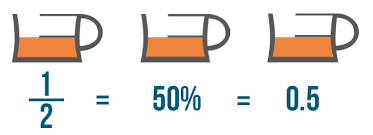
To change a percentage to fraction express the percentage amount as a numerator and 100 as a denominator then simplify the fraction if needed to. The obtained fraction divide it to get its decimal. Example: Change 50% to fraction Solution Express the percentage amount as a numerator and 100 as a denominator hence from the question we are given 50% as the percentage amount hence we express it as follows: 50%=50/100 We simplify the fraction 50/100=1/2 We divide the obtained fraction to get its decimal value 1/2= 0.5 Hence,50%=1/2.
Exercise Change to fractions a) 60% Solution 60/100 = 6/10 = 3/5 b) 24% Solution 24/100 = 6/25
Try these c) 35% d) 2%
Change to percentages a) 1/4 Solution 1/4×100%=25% b) 0.72 Solution 0.72×100%=72% c) 7/8 Solution 7/8×100%= 87.5%
Try these d) 1/3 e) 1/20 f) 0.31
Change to decimals a) 36% Solution 36%= 36/100 = 9/25=0.36 b) 28% 28%= 28/100 =7/25=0.28
Try these c) 7% d) 13.4%
Finding a percentage. To find a percentage of an amount, change the percentage into a decimal then multiply by the amount. Example Find 60% of 150 Solution 1) Change 60% into a decimal 60%= 60/100 =0.6 2) Multiply 0.6 by the amount 150 0.6×150=90 Hence, 60% of 150=90
Exercise 1) Find each of the following a) 68% of 320 Solution 68%= 68/100 =0.68 0.68×320=217.6 Hence,68% of 320=217.6 b) 52.2% of 801 Solution 52.2%= 52.2/100 = 0.522 0.522×801= 418.122 Hence,52.2% of 801=418.122 c) 221% of 370 Solution 221%= 221/100 =2.21 2.21×370=817.7 Hence, 221% of 370=817.7
Try these d) 109% e) 96% f) 77.7% of 120
2) What is 12% of 68kg? Solution 12%= 12/100 12% of 68kg= 12/100×68kg =0.12×68kg =8.16kg Hence, 12% of 68%=8.16kg
3) Jeff is on a journey of 385km. So far, he has completed 31% of his journey. How far has he traveled? Solution 31%=31/100 =0.31 31% of 385km=0.31×385km =119.35km Hence, Jeff has traveled 119.35km.
4) A jug can hold 2.4 liters of water. It is 34% full. How much more water will fit the jug. Solution 34%= 34/100 =0.34 34% of 2.4 liters =0.34×2.4litres =0.816litres The remaining amount of water= (2.4-0.816) litres =1.584 litres Hence, 1.584 litres of water will fit the jug.
5) Which is larger 22% of £57 or 46% of £28. By how much? Solution 22% of £57=22/100×57=0.22×£57= £12.54 46% of £28=46/100×28=0.46×£28= £12.88 £12.88-£12.54=£0.34 Since £12.88 is greater than £12.54. Hence 46% of £28 is greater than 22% of £57 by £0.34.
To SIGN UP and get started in crypto on BINANCE CLICK HERE
According to O’Donnell and Levin (2001) they define educational psychology as the development and application of psychological principles to education as well as the adaptation of psychological perspectives on education. Generally, educational psychology is the branch of psychology that specializes in understanding teaching and learning in educational settings. It is the study of how people learn.
Today’s education system is very complex. There is no one single learning approach that works for every student. Different factors such as class size, learning materials and environment which surrounds the student at home and school contributes to students learning and development.
Educational Psychology provide teachers with research knowledge and skills that teachers can effectively apply to teaching situations and hence enhancing teachers understanding of the factors that influence student learning.
PIONEERS OF EDUCATIONAL PSYCHOLOGY.
There are several pioneers in the early history of educational psychology. Important pioneers include Edward Lee Thorndike, James Dewey, William James.
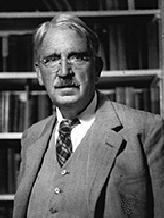
1.John Dewey.
John Dewey established the first major educational psychology laboratory in the United States at the University of Chicago in 1894.He emphasized and promoted the practical application of psychology. John Dewey viewed the child as an active learner. He opposed the traditional system of learning where by children sit quietly in their seats and passively learn in a rote manner. He criticized this system and urged that children learn best by doing.
John Dewey proposed the idea that education should focus on the whole child and emphasize the child’s adaptation to the environment by teaching children in schools how to think and adapt to a world outside school and not only learn about academic topics. This will help children to be reflective problem solvers.
2.William James.
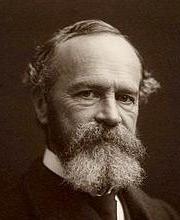
William James was an American psychologist who also had a major influence on the development of psychology in United states of America. The book “The principles of Psychology” written by William James in 1890 contributed much to Psychology. In this book he introduced the idea of stream of consciousness and the theory of emotion. He proposed a set of questions on why we think, feel and smell. He focused on the function of behavior. This approach is called functionalism.
William James also discussed the applications of psychology to children education. He emphasized the importance of observing teaching and learning in classrooms for improving education. He recommended to start lessons at a point just beyond the child’s level of knowledge and understanding to stretch the child’s mind.
3.Edward Lee Thorndike.
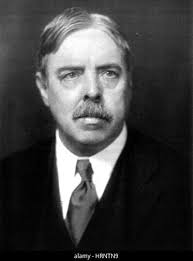
He was the first American psychologist to apply psychological principles to the area of learning. He became famous for his research which led him to formulate the three laws of learning in the early 20th Century. These laws are:
The law of readiness.
This law is also known as ‘The Law of Action Tendency’ this law emphasized on the preparation of action. He urged in the law of readiness that if one is not prepared to learn, then learning cannot be automatically instilled in him.
Example:
Unless a person prepares himself to start learning to run, he will not make any progress and eventually not learn to run at all.
The law of exercise.
The second law of learning according to Thorndike suggests that practice helps in increasing efficiency and durability of learning.
Example:
For a person to be able to run faster then he needs exercise and repetition hence he needs to practice running on a regular basis.
The law of effect.
This law states that behavioral responses that were mostly triggered and initiated by a satisfying result were most likely to occur again in response to the same stimulus.
Later Thorndike modified the law of effect by introducing the concepts of reinforcement, where by he urged that positive reinforcement such as rewards to students help to promote and strengthen their good behaviors at school. While negative reinforcement such as punishments to students help to weaken and eliminate their bad behaviors at school.
To SIGN UP and get started in crypto on BINANCE CLICK HERE