
DEFINITION OF EDUCATIONAL PSYCHOLOGY.
According to O’Donnell and Levin (2001) they define educational psychology as the development and application of psychological principles to education as well as the adaptation of psychological perspectives on education. Generally, educational psychology is the branch of psychology that specializes in understanding teaching and learning in educational settings. It is the study of how people learn.
Today’s education system is very complex. There is no one single learning approach that works for every student. Different factors such as class size, learning materials and environment which surrounds the student at home and school contributes to students learning and development.
Educational Psychology provide teachers with research knowledge and skills that teachers can effectively apply to teaching situations and hence enhancing teachers understanding of the factors that influence student learning.
PIONEERS OF EDUCATIONAL PSYCHOLOGY.
There are several pioneers in the early history of educational psychology. Important pioneers include Edward Lee Thorndike, James Dewey, William James.
1.John Dewey.
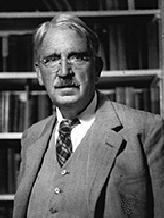
John Dewey established the first major educational psychology laboratory in the United States at the University of Chicago in 1894.He emphasized and promoted the practical application of psychology. John Dewey viewed the child as an active learner. He opposed the traditional system of learning where by children sit quietly in their seats and passively learn in a rote manner. He criticized this system and urged that children learn best by doing.
John Dewey proposed the idea that education should focus on the whole child and emphasize the child’s adaptation to the environment by teaching children in schools how to think and adapt to a world outside school and not only learn about academic topics. This will help children to be reflective problem solvers.
2.William James.
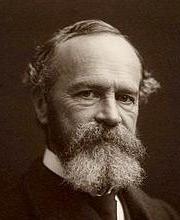
William James was an American psychologist who also had a major influence on the development of psychology in United states of America. The book “The principles of Psychology” written by William James in 1890 contributed much to Psychology. In this book he introduced the idea of stream of consciousness and the theory of emotion. He proposed a set of questions on why we think, feel and smell. He focused on the function of behavior. This approach is called functionalism.
William James also discussed the applications of psychology to children education. He emphasized the importance of observing teaching and learning in classrooms for improving education. He recommended to start lessons at a point just beyond the child’s level of knowledge and understanding to stretch the child’s mind.
3.Edward Lee Thorndike.
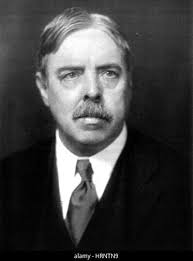
He was the first American psychologist to apply psychological principles to the area of learning. He became famous for his research which led him to formulate the three laws of learning in the early 20th Century. These laws are:
- The law of readiness.
This law is also known as ‘The Law of Action Tendency’ this law emphasized on the preparation of action. He urged in the law of readiness that if one is not prepared to learn, then learning cannot be automatically instilled in him.
Example:
Unless a person prepares himself to start learning to run, he will not make any progress and eventually not learn to run at all.
- The law of exercise.
The second law of learning according to Thorndike suggests that practice helps in increasing efficiency and durability of learning.
Example:
For a person to be able to run faster then he needs exercise and repetition hence he needs to practice running on a regular basis.
- The law of effect.
This law states that behavioral responses that were mostly triggered and initiated by a satisfying result were most likely to occur again in response to the same stimulus.
Later Thorndike modified the law of effect by introducing the concepts of reinforcement, where by he urged that positive reinforcement such as rewards to students help to promote and strengthen their good behaviors at school. While negative reinforcement such as punishments to students help to weaken and eliminate their bad behaviors at school.

To SIGN UP and get started in crypto on BINANCE CLICK HERE

